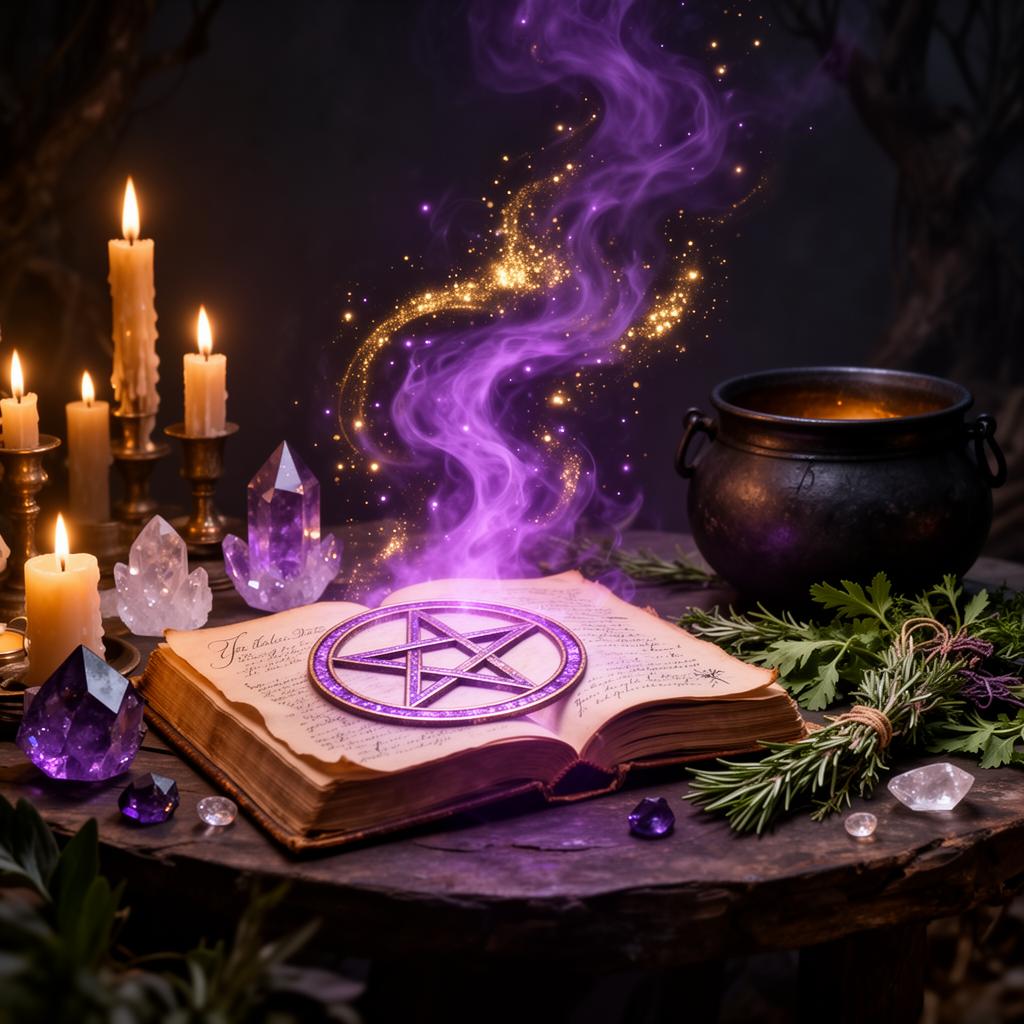
What Is Witchcraft?
Witchcraft is a broad, living spiritual practice rooted in the belief that humans can work with natural energies, intention, and symbolic action to create change in their lives and the world around them. It is not one single religion — it spans cultures, centuries, and continents.
Modern witchcraft draws from folk traditions, ceremonial magic, nature-based spirituality, and personal intuition. Some witches follow specific paths like Wicca, traditional witchcraft, or hoodoo, while others build an eclectic practice that blends many traditions.
At its core, witchcraft is about personal empowerment, connection with nature, and the understanding that intention — focused and directed — is a powerful force.
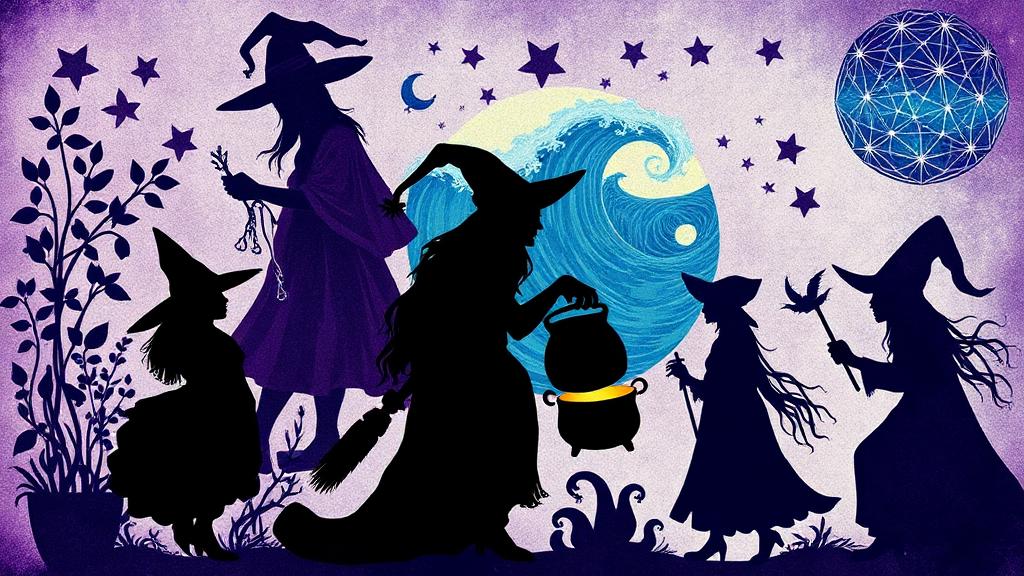
Types of Witches
There is no single "right" way to be a witch. Here are some common paths:
Green Witch — Works primarily with plants, herbs, and the natural world. Their magic is rooted in gardening, herbalism, and earth connection.
Kitchen Witch — Channels magic through cooking, baking, and the hearth. Every meal is a spell.
Sea Witch — Draws power from the ocean, tides, and water magic. Moon phases and water rituals are central.
Hedge Witch — Practices spirit work, journeying between worlds, and ancestral communication.
Cosmic Witch — Focused on astrology, planetary magic, and the movements of celestial bodies.
Eclectic Witch — Blends elements from many traditions into a personal, unique practice.
Traditional Witch — Follows historical folk practices, often specific to a culture or region.
Solitary Witch — Practices alone, building a deeply personal spiritual path.
Your First Altar
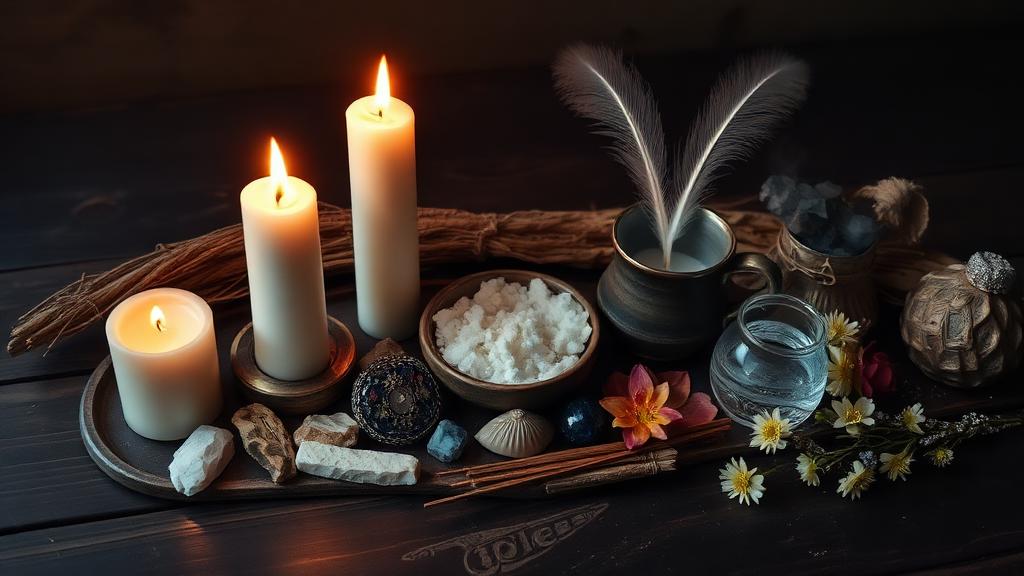
An altar is your personal sacred space — a physical anchor for your spiritual practice. It doesn't need to be elaborate. A windowsill, a corner of a shelf, or a dedicated table all work perfectly.
Start Simple With
A candle (white is universal)
A small dish of salt or earth (earth element)
A feather or incense (air element)
A cup of water (water element)
Something personal — a crystal, a found stone, a meaningful object
Arrange these items in a way that feels right to you. There are no strict rules. Your altar should reflect your intentions, your aesthetic, and your practice. Many witches change their altars with the seasons, the moon phases, or their current magical focus.
Basic Tools
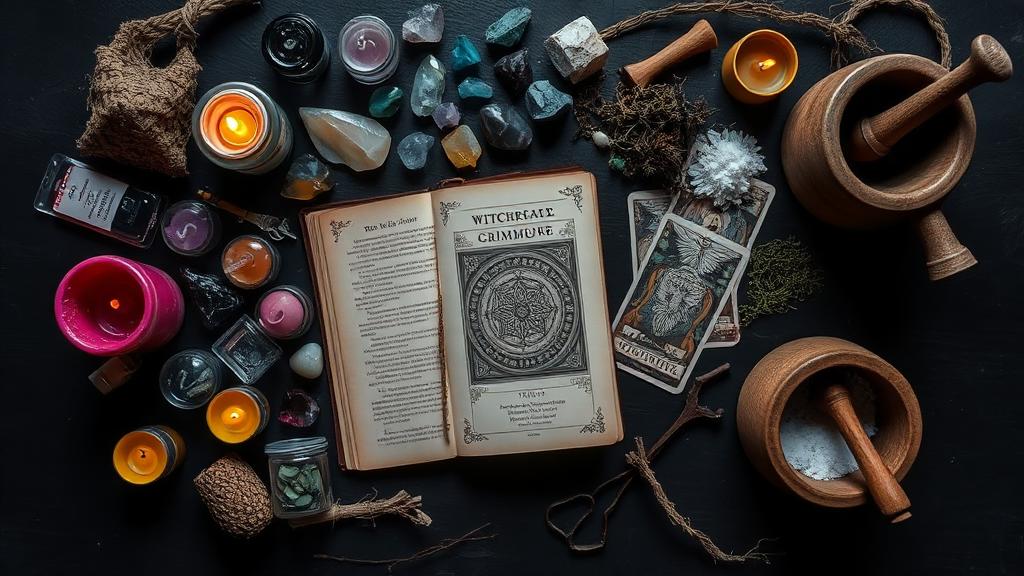
You don't need expensive tools to practice witchcraft. Many experienced witches use simple, everyday items:
Candles — The most versatile tool. Different colors carry different energies (white for purification, green for prosperity, red for passion).
Crystals — Natural energy amplifiers. Clear quartz, amethyst, and black tourmaline are excellent starter crystals.
Herbs — Rosemary, sage, lavender, and cinnamon are kitchen staples with powerful magical properties.
A Journal/Grimoire — Recording your spells, experiences, and insights is essential for growth.
Salt — For protection, cleansing, and grounding. Sea salt or Himalayan salt are popular choices.
Moon Water — Water charged under moonlight, used in spells, rituals, and daily practice.
Remember: the most important tool is your own focused intention.
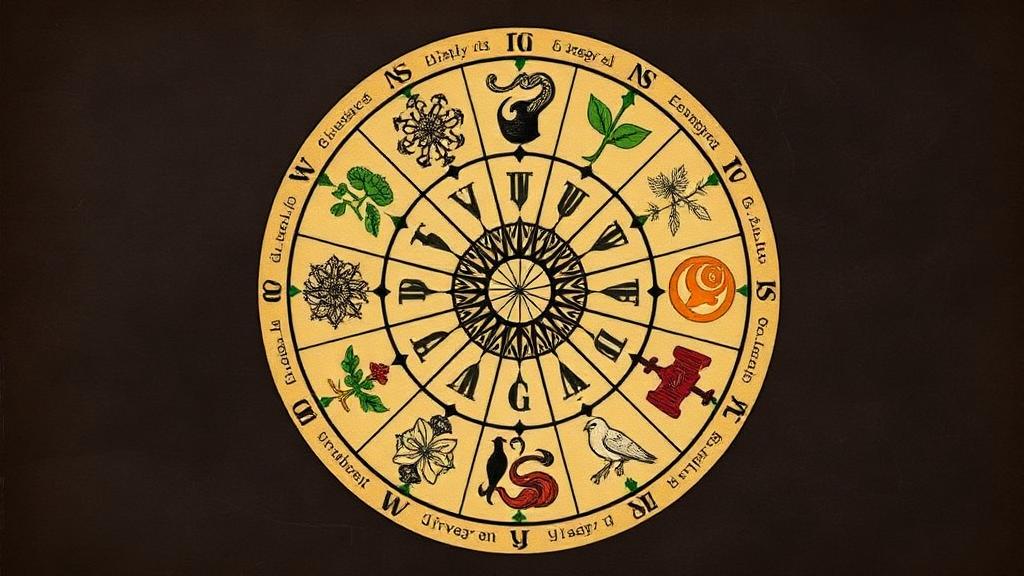
The Wheel of the Year
The Wheel of the Year is a cycle of eight seasonal festivals (sabbats) celebrated by many modern witches:
Samhain (Oct 31) — The witch's New Year. Honoring ancestors, the thinning veil.
Yule (Dec 21) — Winter solstice. Rebirth of the sun, hope in darkness.
Imbolc (Feb 1) — First stirrings of spring. Creativity and purification.
Ostara (Mar 20) — Spring equinox. Balance, growth, new beginnings.
Beltane (May 1) — Fire festival. Fertility, passion, abundance.
Litha (Jun 21) — Summer solstice. Peak power, light, and joy.
Lughnasadh (Aug 1) — First harvest. Gratitude, skill, abundance.
Mabon (Sep 22) — Autumn equinox. Balance, harvest, reflection.
Following the Wheel connects your practice to the natural rhythms of the earth.
Ethics and the Rule of Three
Ethics in witchcraft vary by tradition, but several principles are widely respected:
The Rule of Three (Wiccan) — Whatever energy you send out returns to you threefold. This encourages thoughtful, compassionate magic.
Harm None — The Wiccan Rede states "An it harm none, do what ye will." While not all witches follow this, most practice with an awareness of consequences.
Free Will — Most ethical frameworks discourage manipulating another person's free will (love spells targeting specific people, for example).
Consent — Never perform magic on or for someone without their knowledge and consent.
Personal Responsibility — Your magic, your consequences. Witchcraft empowers you to take ownership of your actions and their results.
Ultimately, your ethical framework is personal. Study, reflect, and develop principles that align with your values.
Finding Your Path
There is no single correct path in witchcraft. Your journey is uniquely yours. Here's how to begin:
Read widely — Explore different traditions, authors, and perspectives. Don't limit yourself to one source.
Practice daily — Even five minutes of meditation, journaling, or candle gazing builds your skills.
Follow your curiosity — If crystals fascinate you, dive deep. If herbs call to you, start growing. Your interests are your guides.
Connect with community — Online forums, local groups, and platforms like Witch-Book offer support and inspiration.
Be patient — Witchcraft is a lifelong practice. There is no rush to "know everything." Growth comes through experience.
Trust yourself — Your intuition is your greatest teacher. If something feels right, explore it. If it doesn't, let it go.